Address
304 North Cardinal
St. Dorchester Center, MA 02124
Work Hours
Monday to Friday: 7AM - 7PM
Weekend: 10AM - 5PM
Address
304 North Cardinal
St. Dorchester Center, MA 02124
Work Hours
Monday to Friday: 7AM - 7PM
Weekend: 10AM - 5PM

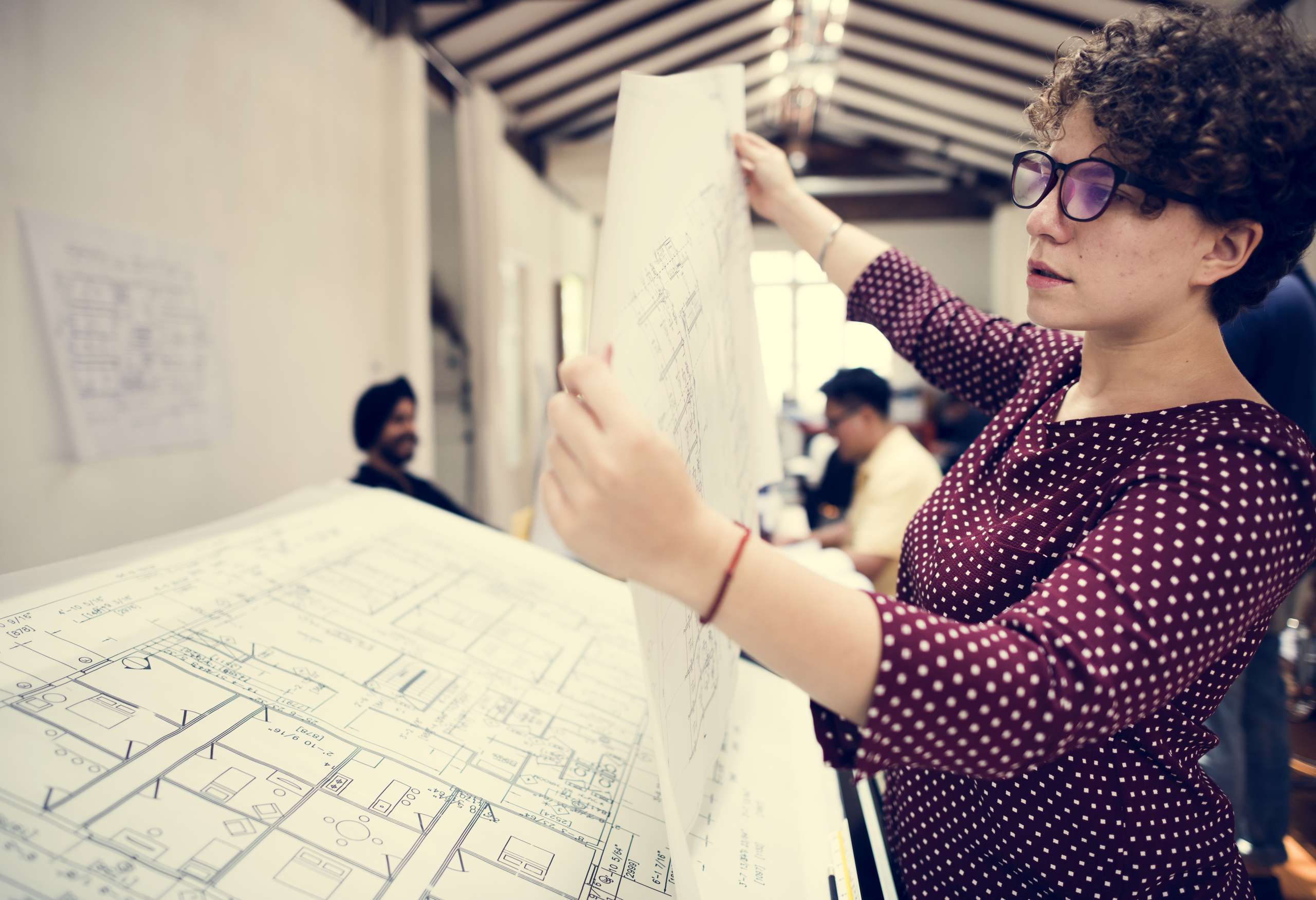
What is the relationship of one part of a building to another? What is the relationship of one building to another in a particular setting? The ratio between the height of a wall and the width of a window, the width of an entrance in relation to the width of the façade, the scale of columns that support an arch or an overhang are all proportional relationships that affect the way we perceive a building. If the proportions are right, the building feels comfortable. If the proportions are wrong, the building may feel awkward or top heavy. Learning to see these relationships develops your ability to analyze buildings in terms of their various parts rather than just their overall impression.
Proportion and balance, two of the principles of design, work together to create buildings that feel stable and comfortable. A building can be balanced in a symmetrical way, with two sides mirroring each other. This works well for monumental buildings that we want to feel solid and dependable. But a building can also be balanced in an asymmetrical way, with different shapes and forms balancing each other. Understanding balance as a principle of design helps you see a building as a composition of various elements rather than a collection of isolated parts. Whenever you see a building or a detail of a building that feels right, study its proportions.
Almost every building that has been built for the ages, by which I mean those buildings that we consider classics, has been designed according to proportional systems. These systems were used to establish the width and spacing of columns, the shape and proportions of openings, the detailing of cornices and overhangs, and even the proportions of the room. A well-designed building is like a well-designed painting. The proportions, balance, emphasis, movement, pattern, unity, and contrast all work together to create a coherent whole. The more you look at buildings, the more you will begin to notice the proportions that make them work. But unless you stop to measure them, you will not appreciate how they contribute to the building’s overall composition.
Begin to study the proportions of your everyday world. Observe how wide and tall door openings are. Notice the proportions of the windows. Are they wide and short or tall and narrow? Are they square? How does the width of the window compare with the wall on either side? What is the relationship of the opening to the overall façade? What is the width of the entrance in relation to the rest of the building? Is the building scaled to the human figure? How does the scale of the building relate to its use? What is the relationship of the building to the street and to other buildings?
These are just a few of the questions you should ask yourself when you are trying to understand the way buildings are composed. As you begin to see the proportions of your everyday world, you will begin to see architecture in a new way. You will begin to appreciate that buildings are designed, and that their design affects the way you live and work in them. You will begin to see that the proportions of a room, a façade, an elevation, a detail, affect the way you feel. If you pursue your observations, you will begin to understand that the act of building is a way of creating an environment that shapes your experience.